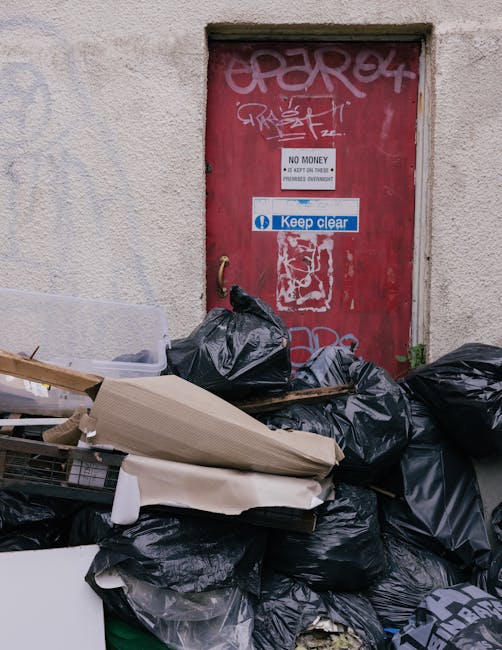
What to know about access issues for Hampstead waste removal
If you are planning a collection in Hampstead, access can make a bigger difference than the waste itself. Narrow roads, shared entrances, basement flats, steep steps, timed parking, awkward kerb space, and busy mews-style streets can all affect how quickly rubbish can be removed and how much labour is involved. In other words, the job may look simple from the outside, then reality turns up with a long flight of stairs and nowhere to stop the van. That is exactly why What to know about access issues for Hampstead waste removal matters before you book anything.
This guide breaks the topic down in plain English. You will learn what access issues are, why they matter, how they are usually handled, and what to check before collection day. We will also cover best practices, common mistakes, compliance considerations, and a practical checklist so you can avoid last-minute stress. If you are dealing with a flat, office, terrace house, basement, or tight commercial premises in Hampstead, this is for you.
To make planning easier, you may also want to compare service options such as waste removal, house clearance, or office clearance depending on the property type and volume of items.
Table of Contents
- Why access issues matter in Hampstead waste removal
- How access issues are usually handled
- Key benefits and practical advantages
- Who this is for and when it makes sense
- Step-by-step guidance
- Expert tips for better results
- Common mistakes to avoid
- Tools, resources and recommendations
- Law, compliance, standards, and best practice
- Options, methods, and comparison table
- Case study or real-world example
- Practical checklist
- Conclusion
- Frequently asked questions
Why What to know about access issues for Hampstead waste removal Matters
Access is often the difference between a smooth collection and a frustrating one. Hampstead has a particular mix of housing and business premises: period homes, basement conversions, mansion blocks, studio flats, busy high streets, and roads where parking can be tight at the best of times. That means the route from your waste to the van can be just as important as the waste type itself.
Why does that matter so much? Because every extra obstacle adds time, labour, and risk. A crew may need to carry items further, use more people, take more care on stairs, or split the job into multiple trips. If there is no safe stopping point for the vehicle, collections can take longer or need rescheduling. Truth be told, this is one of the main reasons quotes can vary even when the rubbish pile looks roughly the same size.
Access also affects safety. Tight internal corridors, uneven paving, basement steps, and shared entrances can all create trip hazards or awkward lifting angles. A good plan reduces the chance of damage to walls, floors, lifts, and communal areas. It also protects the people doing the lifting, which is easy to overlook until something bangs against a bannister. Not ideal.
For local properties, the challenge is often not one single issue but the combination of several small ones: no parking outside, a flight of steps, a narrow doorway, then a courtyard with limited turning space. Those details sound minor on paper. In practice, they shape the whole job.
That is why it helps to think about access before choosing a service. If your waste is coming from a flat, a garage, a loft, or a busy office, planning early can save both money and hassle. And in a place like Hampstead, where streets can be lively and space disappears quickly, that planning is usually worth its weight in tea and patience.
How What to know about access issues for Hampstead waste removal Works
Most professional collections start with a simple question: how easy is it to reach the waste, and how far is it from the vehicle? From there, the team will judge the best approach. That might mean kerbside loading, carrying items from inside the building, using more staff, or booking a longer time slot.
In real life, the process usually goes like this:
- You describe the waste, property type, and access details when requesting a quote or booking.
- The provider assesses practical obstacles such as stairs, parking, gated entrances, lift access, and any restrictions on collection times.
- The team decides whether the job needs additional labour, a different vehicle position, or a special collection method.
- On the day, the crew checks the route before moving items, then removes the waste as safely and efficiently as possible.
- If anything has changed, such as a blocked driveway or unexpected building work, the plan may need adjusting on the spot.
Simple enough, but there is a catch: access information needs to be accurate. If you say the items are "just by the front door" and they are actually down two flights of narrow stairs, the booking may not match the reality. That can lead to delays or awkward extra costs. Nobody enjoys that conversation, least of all at the end of a long day.
Another thing worth knowing is that access affects more than labour. It can influence the size of vehicle used, whether a van can park legally nearby, and how much handling is needed to keep communal areas clear. For instance, a collection from a top-floor flat may be straightforward if there is a lift and loading access nearby. The same volume from a basement flat with a tight staircase is a very different job.
Some providers will ask for photos, a short video, or a description of access points. That is not fussiness. It is how they prevent delays and make sure the right team turns up first time. In our experience, the best collections are the ones where the customer gives a few honest details upfront. Nothing glamorous. Just useful.
Key Benefits and Practical Advantages
Good access planning does more than save time. It improves the entire experience from quote to final sweep-up. Here are the main advantages.
| Benefit | Why it matters | What you notice in practice |
|---|---|---|
| More accurate pricing | Access affects labour and collection time | Fewer surprise charges and clearer expectations |
| Faster collection | Crews can plan the safest route | The job feels organised instead of chaotic |
| Lower risk of damage | Less dragging and fewer awkward turns | Fewer scuffs on walls, doors, and flooring |
| Better safety | Reduced lifting strain and trip hazards | Smoother movement through the property |
| Less disruption to neighbours | Efficient loading reduces noise and time on site | Less chance of complaints in shared buildings |
| Easier planning for repeat jobs | Access notes can be reused and refined | Future collections become simpler |
A well-planned collection also helps when you are dealing with mixed waste. A provider handling furniture clearance, appliance removal, or larger domestic items can decide in advance whether specialist handling is likely. That matters because a sofa on the ground floor is one thing; a sofa in a tight top-floor flat with a bend in the stairs is another story entirely.
There is a less obvious benefit too: better communication. Once you start thinking carefully about access, you naturally think more carefully about the whole collection. What needs to go first? Where should items be stacked? Is there a lift booking window? Can the team use a side entrance? Those questions reduce friction. And as anyone who has tried to move a wardrobe through a cramped hallway knows, friction is the enemy.
One small but important practical gain is peace of mind. You will know that the crew is arriving with the right expectations, which makes collection day feel calmer. Not perfect, maybe. But calmer, yes.
Who This Is For and When It Makes Sense
This is relevant to a lot more people than you might expect. If you live or work in Hampstead and there is any kind of awkward route from the waste to the vehicle, access should be part of the conversation before booking.
It makes particular sense for:
- Residents in basement flats, upper-floor flats, or mansion blocks
- Homeowners with narrow front paths, steep steps, or limited driveway space
- Landlords preparing end-of-tenancy clearances
- Estate managers handling communal collections
- Offices and studios in older buildings with small lifts or tight corridors
- Shops, cafes, and small businesses with restricted loading access
- Anyone clearing bulky items, mixed waste, or large volumes in one visit
If you are dealing with a loft clearance, access can become especially important because ladders, loft hatches, and stair turns all slow things down. The same goes for a garage clearance where the garage is tucked behind a house or set down a narrow shared drive. The waste itself may be straightforward. The route to it is what changes the game.
It also matters when timing is tight. If you need a same-day or short-notice collection, the provider has even less room to improvise. The clearer your access notes are, the better chance they have of fitting the job in without drama. And let's face it, nobody wants a "we'll have to come back tomorrow" situation in the middle of a busy week.
Step-by-Step Guidance
Here is a practical way to plan for access issues without overcomplicating things.
1. Walk the route from the waste to the vehicle
Do a slow walk through the whole path. Start with the waste pile, then move towards the front door, side entrance, lift, stairwell, driveway, or kerbside point. Notice narrow turns, low ceilings, heavy doors, wet paving, and anything that could slow the crew down. It is surprising how often people forget one awkward corner until the day itself.
2. Measure the obvious pinch points
You do not need a surveyor's kit. A rough width of the narrowest doorway, stairwell, or gate is often enough to help the team plan. If you have a particularly bulky item, check whether it can tilt, fold, or be dismantled before collection. This matters a lot for wardrobes, beds, tables, and office furniture.
3. Check parking and loading options
Ask yourself where the vehicle can stop safely and legally. If there is no easy parking outside, the team may need to carry items further. In Hampstead, that can mean sharing the road space with local traffic, residents, delivery vehicles, and the usual commuter chaos. If loading restrictions apply, say so early.
4. Flag stairs, lifts, and shared entrances
Stairs sound obvious until someone forgets to mention the basement. Shared entrances, coded doors, concierge desks, and lift booking systems all affect timing. A lift is not always a shortcut if it is small, busy, or reserved at peak times.
5. Separate hazardous or restricted items
Anything potentially hazardous should be identified early. That might include paint, chemicals, sharp objects, or certain electrical items. A separate service may be required for some materials, so do not leave this until the crew is already at the door. If your waste includes specialist materials, the process may need to be different from a standard household clearance.
6. Share photos where helpful
A couple of photos can save a lot of back-and-forth. A picture of the staircase, parking spot, entrance, and waste pile often tells the story faster than a paragraph. It is not about making the job complicated; it is about making it predictable.
7. Prepare the space before collection
Clear loose items from the route, unlock gates, protect delicate corners if needed, and make sure pets or children are out of the path. If the team is collecting from an office or shop, tell staff which areas need to stay clear. Small things matter here.
Follow that order and you will already be ahead of most rushed collections.
Expert Tips for Better Results
After enough collections, a few patterns become very obvious. The jobs that go well usually have the same ingredients: honest details, sensible preparation, and no hidden surprises. Here are the most useful tips.
- Be honest about the difficult bit. If the access is awkward, say so. Providers would rather know early than arrive with the wrong plan.
- Describe the route, not just the waste. "Three bags and a wardrobe" is useful, but "top-floor flat with a narrow stairwell and no lift" is far more useful.
- Ask about labour assumptions. Some collections are priced differently depending on how far items need to be carried or how many staff are needed.
- Book the right time of day. In busy streets, early morning or quieter periods may reduce parking headaches.
- Keep communal areas tidy. Neighbours notice less, and crews move faster.
- Dismantle what you reasonably can. A flat-pack bed frame or removable table legs can make a huge difference. Sometimes a very small effort saves a very large headache.
- Check access the night before. A delivery van, scaffold, or skip can appear overnight and block the route. It happens more often than people think.
One little tip that sounds silly but works: stand where the van will likely stop and look back towards the property. That view often reveals the real issue. Is there enough turning space? Is the pavement too narrow? Is the front gate awkwardly placed? The eye catches things the brain skips over when you are focused on the mess inside.
If you are planning a bigger clearance, combining access planning with the right service type can help. A home clearance may suit a full property, while a flat clearance is often better for buildings with tighter internal access. That distinction sounds small, but it really does shape the whole job.
Common Mistakes to Avoid
Most access problems are avoidable. Not all of them, of course. Hampstead throws the occasional curveball. But many frustrations come from the same handful of mistakes.
- Understating the access challenge. If the stairwell is awkward, say it plainly.
- Forgetting about parking restrictions. A van may be able to reach the street, but not always to stop there long enough.
- Leaving bulky items assembled. A small amount of dismantling can save major carrying problems.
- Ignoring shared building rules. Some flats, estates, or office buildings have their own loading or lift arrangements.
- Not checking hazardous waste. Mixed waste can change the service needed.
- Assuming all crews need the same access. Different providers, vehicle sizes, and collection methods can vary.
- Booking too tightly around other trades. If decorators, movers, or cleaners are also on site, the route can become crowded fast.
A surprisingly common one? People clear the waste pile but forget the route. So the crew arrives to find the hallway full of shoes, plant pots, a half-open bike lock, and one stubborn chest of drawers that was "definitely staying." It happens. More than once.
Another mistake is not asking what information the provider wants. If they ask for photos or details about stairs, lift size, and parking, they are trying to prevent exactly the sort of issue that causes delays. Give them what they need. It saves everyone time.
Tools, Resources and Recommendations
You do not need specialist equipment for most collections, but a few simple tools and habits can make a big difference.
- Measuring tape: Helpful for doors, lift openings, and bulky items.
- Phone camera: Quick photos of access points are often enough for planning.
- Basic labels or notes: Useful if items are being separated for recycling, reuse, or disposal.
- Protective gloves and sturdy footwear: Sensible if you are moving items yourself before collection.
- Torches or phone lights: Handy for basements, lofts, and dark side passages.
- Door wedges or temporary props: Can help keep access open while the team moves items, provided it is safe to do so.
When comparing services, it is worth looking at more than just headline pricing. Check whether the provider explains access assumptions clearly, how they handle mixed loads, and whether they offer guidance for awkward properties. A transparent pricing and quotes page can be a useful sign that the business thinks carefully about the real job, not just the banner price.
If sustainability matters to you, ask how waste is sorted and handled after collection. For many customers, that is part of the decision now. A clear recycling and sustainability approach can help you feel more confident about where the material goes next. And if you are disposing of mixed household items, the guidance on what can go in a skip can also help you understand what should be separated before pickup.
For businesses, the same thinking applies to business waste removal and confidential shredding, where access, timing, and building rules can be just as important as the waste stream itself.
Law, Compliance, Standards, or Best Practice
Access planning is not just a convenience issue. It also connects to safety, responsibility, and good operating practice. In the UK, waste should be handled carefully, stored sensibly before collection, and moved in a way that avoids putting people at unnecessary risk. That broad principle matters whether you are a homeowner, landlord, or business.
For commercial premises, the expectation is usually higher because there may be more people on site and more chances for obstruction. Shared corridors, fire exits, loading bays, and reception areas should stay clear. If a collection requires temporary access through communal space, it is sensible to coordinate with building management rather than improvise on the day.
Safety is the big one. A provider should think about manual handling, trip hazards, safe lifting routes, and whether the property layout makes a standard collection unsafe. If a staircase is too narrow, a lift is too small, or an item is too heavy to move safely, the team may need to adjust the method rather than force it. That is not being awkward. That is basic best practice.
For waste that may be sensitive, hazardous, or regulated, it is especially important to confirm the correct handling method in advance. Some items cannot simply be bundled into a mixed load. If there is any doubt, ask before collection day. A quick question now is better than a delayed job later.
Providers should also have clear internal policies for safety, insurance, complaints, and data handling. That does not solve access problems by itself, of course, but it does tell you they are thinking about the job professionally. If you want to understand how a business works behind the scenes, pages such as health and safety policy, insurance and safety, and complaints procedure can be useful reading.
Options, Methods, or Comparison Table
Different access situations call for different approaches. There is no single best method for every property, which is why comparing them properly helps.
| Method | Best for | Strengths | Limitations |
|---|---|---|---|
| Kerbside collection | Properties with easy outdoor loading | Fast, efficient, lower handling time | Needs legal parking or a safe stopping point |
| Full-service from inside | Flats, houses, offices, and mixed access sites | Convenient and hands-off for the customer | More labour and more dependence on clear routes |
| Pre-dismantled item removal | Bulky furniture or awkward items | Improves movement through narrow spaces | Requires extra preparation before the crew arrives |
| Multi-person carry plan | Heavy or awkward loads | Safer for stairs and corners | Usually takes more coordination and time |
| Split collection by area | Large clearances with mixed access | Reduces bottlenecks and confusion | May take longer than a single pass |
If you are not sure which approach is right, think about the bottleneck. Is it parking, stairs, item size, or building rules? That answer usually points to the best method. For example, a house with a clear driveway may suit a simple collection, while an older flat with no lift may need a more labour-focused plan.
For bulky household items, services such as mattress and sofa disposal or furniture disposal may be more efficient than trying to move everything as one mixed load. It depends on the layout, the item type, and how much carrying is involved.
Case Study or Real-World Example
Here is a realistic Hampstead-style example. A resident in a basement flat needed to clear old furniture, a broken desk, and several black bags of mixed household waste. The road outside was busy, parking was tight, and the building entrance sat a few steps below pavement level. On paper, it looked like a routine collection. In practice, it was one of those jobs where small details mattered a lot.
The access notes made the difference. The customer flagged the basement steps, mentioned that the hallway turned sharply near the front door, and sent photos of the route. They also confirmed that a neighbour's vehicle often blocked part of the frontage in the afternoon, so the collection was booked earlier in the day. That one choice saved a headache.
On the day, the team knew to bring enough labour for the heavier pieces and to protect the stair edges during movement. The desk was carried out first while the hallway was clear, then the smaller bags followed once the route was reset. Nothing dramatic. No heroic movie music. Just steady, calm work. The job finished faster because everyone knew the plan.
The main lesson is simple: access problems are rarely solved by force. They are solved by information. When the route is understood in advance, even an awkward property becomes manageable.
Practical Checklist
Use this checklist before booking Hampstead waste removal with access challenges. It is short on purpose. A long checklist looks impressive, but this one is the one you will actually use.
- Have you described the property type clearly?
- Do you know whether there are stairs, a lift, or a basement entrance?
- Can the vehicle park or stop legally near the property?
- Have you checked for loading restrictions or busy time windows?
- Are the largest items likely to fit through doors and turning points?
- Can anything be dismantled before collection?
- Have you identified any hazardous or restricted materials?
- Are communal areas, hallways, and entrances clear?
- Have you shared photos if the access is unusual?
- Have you asked whether extra labour may be needed?
- Have pets, children, or staff been kept out of the route?
- Do you know which items are staying and which are going?
Quick summary: the smoother the access, the smoother the collection. If there is one thing to remember, it is this: a few honest details upfront usually prevent most problems later. Simple, really.
Get a free quote today and see how much you can save.
Conclusion
Access issues are one of the most practical parts of waste removal, but they are also one of the easiest to overlook. In Hampstead, where properties and streets can be beautifully varied and sometimes a little awkward, a bit of preparation goes a long way. Whether you are clearing a flat, house, office, garage, loft, or shop, the route matters almost as much as the rubbish itself.
Think of it this way: the best collections are rarely the ones that look exciting. They are the ones that run quietly, safely, and without surprise. A clear access plan helps with price, timing, safety, and peace of mind. And that, to be fair, is what most people really want.
If you are unsure how your property will affect the job, start by sharing the details you do know. A good provider can work with that. The important thing is not perfection. It is enough information to make the day run well. That little bit of care often makes the whole thing feel lighter.
Frequently Asked Questions
What counts as an access issue for waste removal?
An access issue is anything that makes it harder to reach, lift, carry, or load waste safely. That can include stairs, narrow hallways, basement entries, limited parking, locked gates, small lifts, or long carrying distances.
Do I need to mention access problems when booking?
Yes, absolutely. The more accurate your description is, the better the provider can plan labour, vehicle position, and timing. It usually helps avoid delays and unexpected costs.
Will access issues make my Hampstead waste removal more expensive?
They can, because difficult access may require more labour or take longer to complete. The exact impact depends on the property, the items, and how far the waste needs to be carried.
How can I make a flat clearance easier for the crew?
Clear the route, check lift access, dismantle large items where possible, and tell the provider about stairs, door widths, or other tight spots. Photos help too.
What if there is no parking outside my property?
Say so when you request the quote. The crew may need to plan for a longer carry, a different parking point, or a different collection time. That is common in busy parts of Hampstead.
Can waste be collected from a basement flat?
Yes, usually, but basement access often takes more time and care. Stairs, low ceilings, and tight turns are the things to check first.
Should I dismantle furniture before collection?
If it is safe and practical, dismantling furniture can make collection much easier. Flat-pack items, bed frames, and large tables are often simpler to move in smaller parts.
What photos are useful for access planning?
Photos of the front entrance, stairs, hallway, parking area, gate, lift, and the waste itself are most helpful. A few clear images can be better than a long explanation.
How do access issues affect same-day waste removal?
They matter even more when the job is urgent. If access details are unclear, same-day collections can be delayed because the provider may need more labour, a different vehicle plan, or extra time.
Are there special rules for waste in communal buildings?
Often there are building-specific rules about lifts, corridors, loading areas, and quiet hours. It is best to check with the building manager or landlord before collection day so the crew does not run into avoidable problems.
What should I do with hazardous items?
Do not mix them into a general waste pile without checking first. Hazardous or restricted items may need separate handling, so mention them early and ask how they should be prepared.
How do I know if a provider is good at handling awkward access?
Look for clear questions during the booking process, sensible advice about stairs or parking, and transparent information about safety and pricing. A provider who asks detailed questions is usually trying to do the job properly, not make life difficult.
If you are planning a clearance soon, take ten minutes to map the route, note the pinch points, and share them clearly. It is a small bit of effort that often saves a very big one later. And honestly, that is usually the difference between a rushed day and a smooth one.