Commercial Waste Removal in Hampstead
Commercial waste removal in Hampstead needs to be practical, organised and suitable for the way local businesses work. We handle the collection and clearance of trade waste from offices, shops, hospitality premises and other commercial settings, with an approach that keeps the process straightforward for managers and staff. The service is built around removing unwanted items, mixed business waste and recyclable materials in a way that supports day-to-day operations without unnecessary disruption.
Our work can cover regular accumulations, one-off clearances and ad hoc loads that need moving promptly. Furniture, packaging, fixtures, paper, office contents and general business waste are all common examples of what may be cleared, provided the items are suitable for removal and disposal under the relevant waste rules. Where a site has more specific needs, we can tailor the collection to the type of material and the access available.
For a clear next step, request a quotation with details of the waste, the size of the load and any access points that matter on site. A short description is usually enough to start planning. If you need to speak through the practicalities first, use the contact route on the site and keep the request focused on the waste itself.
Business waste collections arranged around your premises
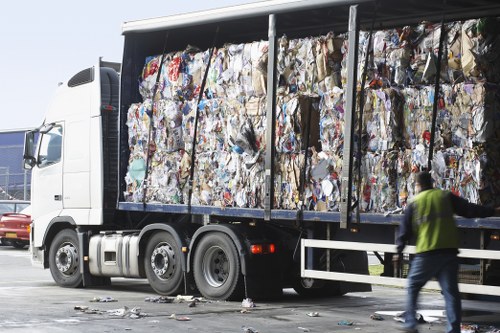
Commercial waste is rarely identical from one business to another, so the service works best when the collection method matches the premises. Offices may need paper waste, outdated equipment, shelving or furniture cleared. Retail units may have display items, packaging and storage materials. Hospitality settings may generate different loads again, including mixed rubbish from back-of-house areas. We aim to remove the waste in a way that suits the site layout and the material being dealt with.
Our focus is on safe and orderly removal rather than simply shifting everything in one go. That means considering access routes, the load type and whether any items need separating for disposal or recycling. If you have a mixed collection, it is often easier to handle when similar materials are grouped together before the visit, but that is a practical preference rather than a strict requirement. The main aim is to make the collection efficient and compliant.
Common commercial clearances often involve a combination of items rather than a single waste stream. Typical examples include:
- office desks, chairs and storage units
- cardboard, packaging and shelf-ready waste
- old stock, display materials and fixtures
- miscellaneous general business rubbish
Office waste removal and workspace clearances
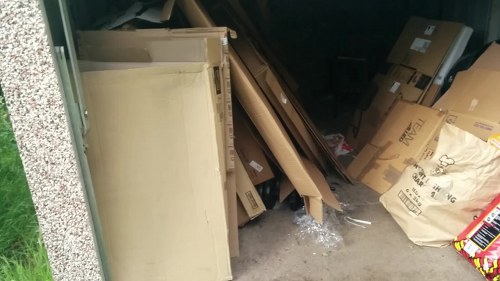
Office waste removal can involve more than standard bin waste. Workspaces often need redundant furniture, archive materials, filing cabinets, monitors, computers and mixed contents taken away when they are reconfiguring, downsizing or closing a room. We remove office items that are ready to leave the premises and can help keep circulation spaces clear while the work is carried out. The emphasis is on a tidy, methodical removal of items that are no longer wanted.
Some offices need careful handling because of shared corridors, lifts, reception areas or security procedures. In those situations, access and timing are just as important as the waste itself. A planned collection can reduce interruption to staff and visitors, and it is often useful to separate reusable materials from general rubbish before the visit. That keeps the clearance more organised and can help with the disposal route for each item.
Where an office is being vacated or altered, the waste may include a broad mix of items from several areas. Desks, chairs, cupboards, broken fittings, paper records and packaging can all appear in one clearance, which is why a service needs to be adaptable rather than narrowly defined. If the load includes items that need particular handling, mention them at the quotation stage so the collection can be planned properly.
Furniture, fixtures and bulky items
Commercial premises often accumulate bulky items that are difficult to move internally, especially when the layout changes or equipment is replaced. We handle furniture clearance for businesses that need old seating, tables, cabinets and other large items taken away without leaving them in back rooms or corridors. The same applies to fixed or semi-fixed fixtures that are no longer required and are ready for removal as part of a broader waste job.
This part of the service is useful when a room is being emptied in stages. You may have a reception area, meeting room, storeroom or staff area that is being updated, and the clearance may need to happen without disturbing the rest of the building. We work with the materials that are available to remove, keeping in mind that not every bulky item is straightforward to shift and that some may need to be dismantled or moved in sections.
Preparation does not need to be complicated. If possible, separate items that are definitely going, keep access routes open and note anything that is awkward to move. A short list of the main pieces is usually enough to help with planning. Furniture clearance is a useful option when the main task is removing large items rather than dealing with general rubbish alone.
Mixed waste, bagged rubbish and ongoing clearances
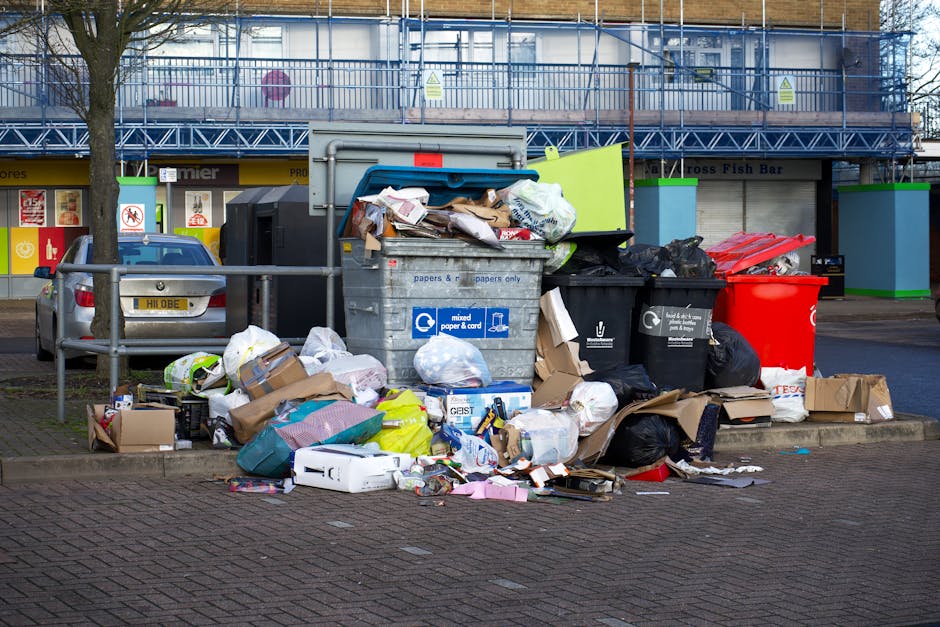
Some businesses need a practical answer for mixed waste rather than a single specialist collection. That might include bagged rubbish, packaging, redundant contents and smaller items gathered from day-to-day operations. Commercial waste removal is well suited to these situations because it can handle a varied load without forcing the business to arrange several separate clearances for different materials.
Where waste builds up over time, a one-off collection can be a sensible reset before a cleaner routine is put in place. That may be particularly useful after stock changes, refurbishments, stockroom tidy-ups or the clearing of an unused area. We remove what is ready to go, and we do so with an eye on disposal pathways, so recyclable material is not treated the same way as ordinary rubbish if it does not need to be.
If you are deciding what to include, think in terms of actual waste rather than items that are still in active use. The clearer the scope, the easier it is to plan the collection and estimate what equipment or labour may be needed. If you want a wider view of the service, business waste removal is the main page for commercial customers looking for a general collection solution.
Recycling, sorting and disposal routes

Not every item in a commercial clearance needs the same disposal route. Cardboard, paper, metal, furniture and electrical items may all have different handling requirements, and a sensible collection takes that into account from the outset. We aim to separate suitable materials where practical so the waste can be directed appropriately rather than all being treated as a single undifferentiated load.
This is one reason commercial waste removal can be more effective than simply emptying a space without a plan. A mixed collection often becomes easier to manage when the likely waste streams are considered in advance. For example, a shop refit may produce packaging and display waste, while an office clearance may produce paper and furniture. In both cases, the sorting step supports a tidier and more orderly disposal process.
If sustainability matters to your business, it is sensible to raise it early when asking for a quotation. We can then consider the mix of materials and the disposal route that best matches them. For businesses that want to understand broader handling, recycling and sustainability gives a useful overview of that side of the service.
About Hampstead
Hampstead is an area in north-west London known for its combination of village-like streets, older buildings and open green spaces. Hampstead Heath is one of its defining landscapes: a large ancient parkland of woodland, grassland, ponds and high ground that has long shaped how the area is understood and used. The Heath includes Parliament Hill, widely associated with views across London, and it remains one of the most recognisable features in the district. Hampstead itself grew from a rural settlement into a fashionable London suburb during the eighteenth and nineteenth centuries, and that history is still visible in the architecture. Georgian terraces, Victorian houses and narrow lanes sit alongside later residential and civic buildings, giving the area a layered streetscape rather than a single consistent style. The centre of Hampstead around the High Street and Hampstead Underground station retains a distinctive mix of independent shops, cafés and public houses, with winding streets that differ from the more regular grids found in other parts of London. Cultural life has also played a strong role in the area’s identity. Hampstead has been associated with writers, artists and intellectual life for generations, and places such as Keats House reflect that literary heritage. The area’s museums, churches and historic houses add further depth, while the surrounding conservation areas help preserve much of the older built character. Even with London’s wider growth around it, Hampstead remains closely identified with its heath, its elevated ground and its blend of urban and semi-rural qualities.
Quoted waste work for different commercial settings
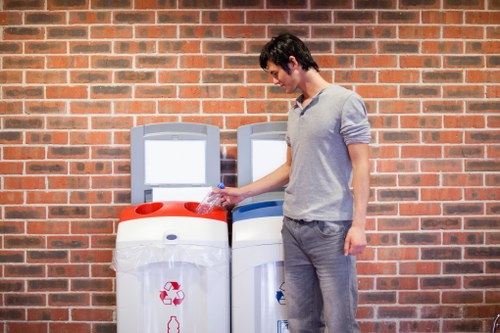
Quotation requests are easier to handle when the description of the waste matches the actual job. A premises with a few bulky items will usually be priced differently from one with a mixed clearance, difficult access or heavier materials. For that reason, the most useful information is often the simplest: what needs removing, how much there is, and whether there are any practical constraints such as narrow stairs or limited loading space.
We can also help distinguish between waste that can be removed in a straightforward collection and material that needs extra care. Items from offices, retail units, storage areas and hospitality sites may all fall within the same broad commercial category, yet their disposal routes can differ. That is why a quote should be shaped by the load itself rather than by a generic assumption. If you are planning several areas at once, note them together so the waste can be assessed as one organised job.
Pricing and quotes is the best place to start if you want to understand how to request a quotation, and you can use the same information to ask for a commercial collection that suits your site. Send the details, describe the waste and ask for a quote; that is usually enough to begin.
Commercial waste from offices, shops and shared premises
Business premises often produce waste that is part operational, part occasional and part linked to a change in layout or usage. Office desks may be replaced. Shop fittings may be refreshed. Shared premises may have old stock or communal items that need to go. Commercial waste removal is designed for these situations because it can accommodate different item types without requiring each one to be treated as a separate project.
Where several organisations use the same building, planning becomes especially useful. It helps to know which area the waste came from, who is responsible for the items and whether any materials should be kept apart. That can prevent confusion and makes the collection more straightforward for everyone involved. The clearer the scope, the easier it is to remove the waste efficiently and with less interruption to the premises.
If confidential paperwork is among the items to be cleared, it should be considered separately from ordinary rubbish. Not every clearance includes this, but some do, and it is better to identify it early than to leave it mixed in with general waste. Confidential shredding is relevant where paperwork needs handling with added care rather than ordinary disposal.
Planning the collection and preparing the site
There are two practical questions that matter most before a commercial collection: what is being removed, and how easy is it to reach? A concise description of the waste and any access limitations is usually enough to shape the visit. If possible, keep the items together rather than spread across multiple rooms, because that reduces the time spent locating and moving them. These basics are often more useful than long explanations.
It can also help to identify whether any items are fragile, heavy or awkward. That does not mean the job becomes complicated; it simply means the collection can be approached in a sensible order. For workplaces that operate during set hours, timing may matter as well, and a short note about preferred access can make the process smoother. A little organisation at the start is often enough to make the rest of the clearance more efficient.
If the project includes a larger batch of items that needs to be cleared in one visit, it is worth thinking in terms of the whole load rather than individual objects. Book online if you already know what needs removing and want to move ahead with the arrangement. Otherwise, gather the key details first and then ask for a quotation.
Waste types and service choices
Different commercial sites produce different waste streams, and the right service choice depends on which materials are present. Some loads are mainly furniture and fittings. Others are made up of paper, packaging, stock or general rubbish. In certain cases there may also be heavier or more awkward items that need extra handling. Choosing the service becomes easier once the waste has been described accurately rather than broadly.
It is also sensible to consider whether the clearance is a one-time event or part of a recurring pattern. A single removal may be enough for a refit or move, while an ongoing business might need a repeat collection whenever certain materials accumulate. Either way, the work benefits from a consistent approach: identify the waste, decide what can be removed, and make sure the collection fits the site. That is the simplest route to an orderly result.
For businesses that want a more general page on waste handling, waste removal provides a broader overview, while this page stays focused on commercial waste removal in Hampstead and the types of collections businesses commonly need.
Final steps and making a clear enquiry
When you are ready to move forward, keep the request simple and direct. State the type of premises, the main items to be removed and whether the waste is mixed or mainly one material. If you have photographs, they can help, but they are not the only way to describe the job. A clear written summary is often enough to begin a proper quotation and avoid unnecessary back-and-forth.
Where access matters, mention that as well. Stairways, basements, shared entrances and loading restrictions can all affect the collection approach. The point is not to make the enquiry longer; it is to make it more accurate. If the waste includes anything unusual, say so at the same time as the main description. That helps keep the process focused and reduces the chance of delay.
Request a quotation today and send the key details of your commercial waste clearance in Hampstead. If you are ready to proceed, use contact us to make the enquiry and arrange the next step.